
Sewer Scope Inspections for Cast Iron Pipes in Calgary Homes
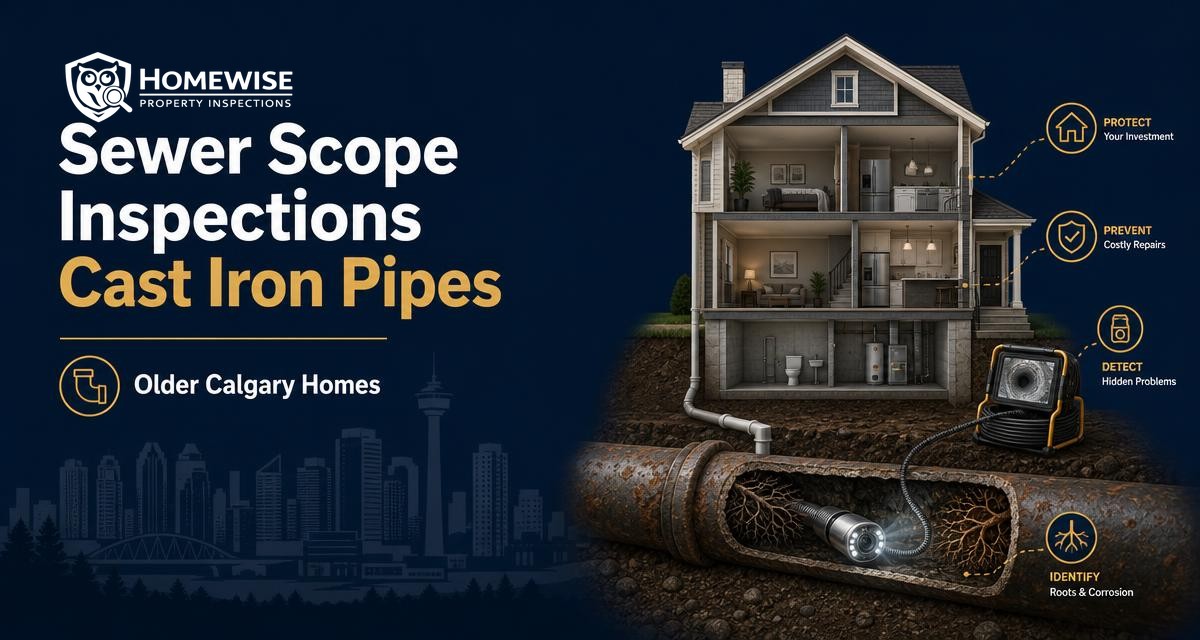
Calgary has thousands of homes built between the 1940s and 1970s with cast iron sewer lines. From the outside, the pipe looks solid. It is cast iron, after all. But the real damage happens on the inside — where decades of wastewater, minerals, and Calgary's hard water slowly eat away at the pipe wall. A standard home inspection can't see any of that. A sewer scope can.
Why cast iron sewer lines are a concern in Calgary
Cast iron was the standard material for sewer and drain lines in homes built before the mid-1970s. Neighbourhoods like Mount Royal, Elbow Park, Britannia, Parkdale, Bowness, Bridgeland, and Tuxedo are full of them. Cast iron is durable, quiet, and fire-resistant — but it is not immune to corrosion.
Over 50+ years, the interior of the pipe develops rust, scaling, and pitting. The wall becomes thinner and rougher. Grease, debris, and waste catch on that rough surface, accelerating the problem. Eventually the pipe can crack, bell out at the joints, or collapse entirely — often with little warning from inside the house.
Cast iron fails from the inside out
This is the key point every Calgary buyer should understand. A cast iron sewer line can look fine from the basement cleanout and still be in poor condition underground. The damage is hidden inside the pipe, where no flashlight or visual inspection can reach.
Common internal defects we find with a sewer scope include:
- Interior scaling and rust buildup that narrows the pipe diameter and traps debris.
- Pitting and corrosion that weakens the pipe wall and creates leak paths.
- Cracks and fractures caused by ground movement, freeze-thaw, and age.
- Bellied or sagging sections where water and solids collect and cause blockages.
- Offset joints where sections of pipe have shifted apart, often from clay soil expansion or tree roots.
- Root intrusion through separated joints and cracks — especially in mature neighbourhoods with mature trees.
Why a sewer scope should be added to your inspection
A pre-purchase home inspection is visual and non-invasive. The inspector does not run water for extended periods, does not camera the sewer line, and cannot see underground. That means the most expensive system in the house — the buried sewer line — is largely unchecked.
A sewer scope inspection fills that gap. We insert a waterproof HD camera through the interior cleanout and run it to the city lateral or septic tank. The camera shows the actual condition of the pipe wall in real time. For cast iron lines, this is often the only way to know whether you're buying a functional drain or a future excavation.
Warning signs that don't always show up during a showing
Many homes with failing cast iron drains show no obvious symptoms. The drains work, the toilets flush, and the basement is dry. But that can change quickly after you take possession. A sewer scope catches problems before they become emergencies:
- Slow drains that the seller may have "managed" with chemical drain cleaners.
- Recurring clogs that suggest rough pipe walls catching debris.
- Gurgling sounds from drains or toilets, especially when other fixtures run.
- Old cast iron visible in the basement with heavy rust, flaking, or previous patching.
- Homes where the sewer line has never been scoped, especially those over 50 years old.
What happens if the camera finds damage
If the sewer scope reveals significant cast iron deterioration, you have options before closing:
- Negotiate the repair or replacement with the seller, backed by video evidence.
- Request a credit toward the cost of trenchless pipe lining or full replacement.
- Walk away if the damage is extensive and the seller won't address it.
- Plan for the repair if you still want the home but need to budget for it.
Our reports include the exact distance and depth of each defect, so a plumber can locate the problem without exploratory digging.
How much does cast iron sewer replacement cost?
Replacing a cast iron sewer line from the house to the city lateral typically costs between $8,000 and $25,000 in Calgary, depending on length, depth, access, and whether the street or sidewalk needs to be restored. Trenchless lining can sometimes reduce that cost, but it is not suitable for every pipe condition.
A sewer scope inspection usually costs a few hundred dollars. It is one of the best insurance policies a buyer can purchase.
When to absolutely add a sewer scope
We recommend a sewer scope with every pre-purchase inspection on homes with cast iron drain lines, especially when:
- The home was built before 1975.
- There are mature trees near the sewer line path.
- The seller has no records of the sewer line being scoped or replaced.
- The home has experienced backups, slow drains, or frequent plumbing calls.
- Visible cast iron in the basement shows rust, flaking, or previous repairs.
What HomeWise checks during a sewer scope
Our sewer scope inspection includes an HD video camera run from the interior cleanout to the city lateral or septic tank. We document pipe material, condition, diameter, slope, joints, root intrusion, cracks, offsets, bellies, and standing water. You receive a narrated video, photos, and a written report with clear recommendations.
When combined with a full home inspection, this gives you a complete picture of the property — above ground and below.
Buying a Calgary home with cast iron drains? Call (403) 710-7770 or book a home inspection with sewer scope.