

Log Home Inspections in Alberta: What We Check and Why Log Homes Need a Specialist
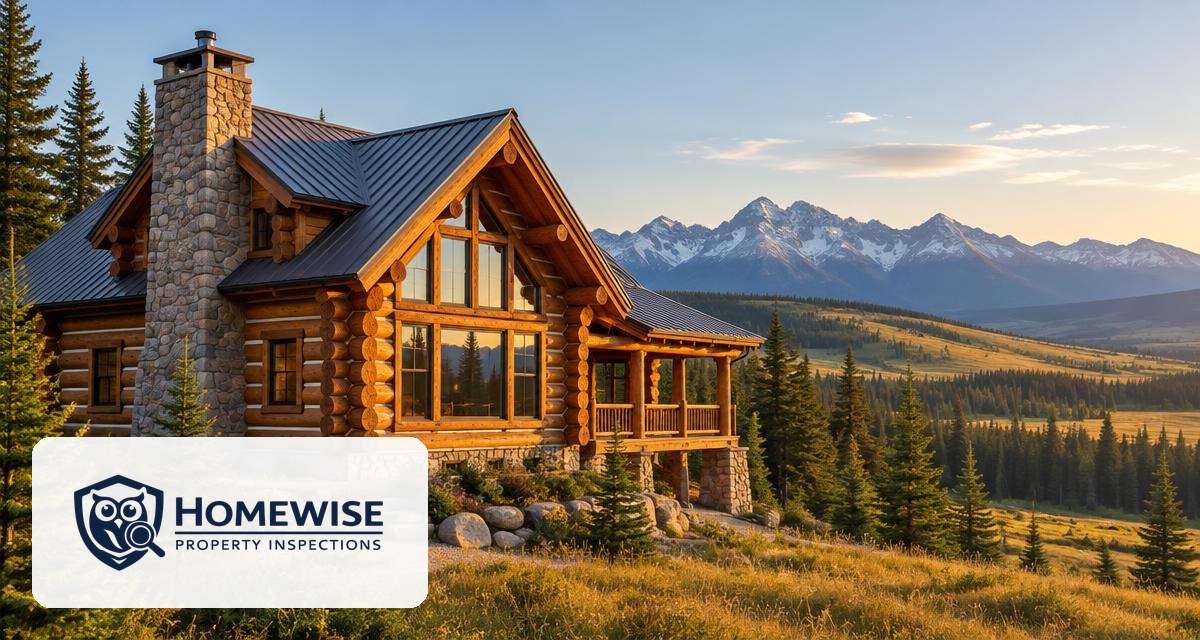
Log homes are a small part of our inspection work — and a part we've deliberately built expertise in. Alberta has more log homes than most provinces: handcrafted and milled log builds dot the acreages around Bragg Creek, the hills west of Cochrane, the Kananaskis corridor, and communities like Canmore. We inspect log homes regularly, and we can tell you up front: a log home does not forgive a generic inspection. The failure points are unique, some of them are hidden until they're expensive, and the vocabulary is different. Here's what a proper log home inspection covers, and what to look for if you're buying one.
Why log homes are a different inspection
A stick-built home is a frame with cladding on it. A log home is the structure, the insulation, and the exterior finish all in one material — and that material is organic. Wood moves. It shrinks as it dries, it absorbs moisture, it feeds insects, and it flexes with Alberta's freeze-thaw cycles and Chinook temperature swings. That means the biggest risks in a log home aren't the ones a standard inspection checklist is built around:
- Settling: Log walls lose height as logs dry and compress — often 3–6% on a full-height wall, and sometimes more. That movement has to be designed for, and it has to keep working years later.
- Moisture: Water is the enemy of every home, but in a log home it has more ways in and more places to hide.
- Wood-boring insects: Carpenter ants, termites, and woodpecker damage are real concerns that don't apply the same way to a brick or vinyl-sided home.
- Air sealing: Between the logs, chinking and gaskets do a job that's handled by sheathing and house wrap in a conventional home — and they age.
What our log home inspection includes
1. Log walls, logs ends, and wood condition
We walk every elevation and examine the logs themselves: checks (the splits that form naturally as logs dry), which way they face, and whether they're channeling water into the wall. We probe for soft wood and rot — especially the bottom course and log ends, where moisture concentrates and where decay starts. We look for fungal growth, staining, and insect activity including carpenter ant frass and woodpecker holes. Checks aren't automatically a defect — but a check facing the sky on a horizontal log surface is an entry point for water, and we flag the difference.
2. Chinking and sealant joints
Chinking — the flexible sealant between courses — is a log home's weather seal. We check its adhesion to the logs on both sides, look for gaps where it has pulled away, and examine the backer rod condition behind it. Failed chinking shows up inside as drafts, moisture staining, and higher heating bills. In Alberta's climate, with 30-degree summer days and -30 winter nights, a chinking system that has lost its flex lets water and air in at the exact moment it matters most.
3. Settling systems and structural movement
Well-built log homes have engineered features that let the walls settle: slip joints in plumbing and ducting, gap rooms above interior partitions, jacks under posts and beams, and oversized window and door rough openings with room to trim. We check whether those systems are still doing their job. A settling gap that's been filled with rigid framing, a plumbing stub that's been squeezed, or a compression jack that's been over-tightened are signs of movement being fought instead of accommodated — and they predict cracked drywall, sticking doors, and worse.
4. Moisture, overhangs, and drainage
Roof overhangs are a log home's umbrella — protected walls stay drier and last decades longer than exposed ones. We measure how well the design protects the logs, check gutters and downspouts, and evaluate grading and splash-back the way we would on any home, then apply it to what it means for wood. Inside, we look at window sills, corners, and anywhere interior humidity has been sitting against a log face. Thermal imaging, included in every HomeWise inspection, helps us find moisture and air-leak patterns in the wall system that aren't visible to the eye.
5. Roof, mechanicals, and the standard systems
Everything a normal inspection covers, we still cover: roof and attic, electrical, plumbing, heating, insulation, and interior finishes. Two things get extra attention in log homes. First, wood stoves and fireplaces are common — WETT-certified evaluation is available as an add-on if the home has a wood-burning appliance. Second, mechanical systems in log homes are often tucked into tight, hidden chases; we check that anything penetrating the log walls was done with a slip detail and is sealed properly.
6. The log-specific report
Like every HomeWise inspection, you get the same-day interactive digital report — organized so you can click through findings, with photos of every log defect, chinking failure, or moisture pattern, and clear language about what's urgent and what's maintenance. If you're mid-purchase, that report is what you use to negotiate or walk away.
Common problems we find in Alberta log homes
- Bottom-course rot from snow piled against the walls and splash-back — the single most common expensive repair.
- Failed chinking that's ready for maintenance, or worse, chinking patched with rigid materials that crack with the next season.
- Checks that channel water upward-sloping into the wall, leading to internal decay that isn't visible from outside.
- DIY additions — porches, dormers, and second-storey additions framed without accommodating ongoing settling.
- Carpenter ant activity in moist, shaded wall sections, often discovered during the hottest months.
- UV damage on south- and west-facing logs where the finish has failed and the wood has greyed and fissured.
Buying a log home? Ask these questions
- When was the chinking last redone, and with what product?
- Was the home built by a log home manufacturer or a handcrafted builder — and are there records?
- Has the settling settled down, or is the home still actively moving?
- What's the log species? Western red cedar, spruce, and pine age very differently.
- When was the exterior finish (stain) last applied? Log homes need re-staining every few years — a deferred finish means a deferred repair.
Log home inspection cost in Alberta
Log home inspections follow our standard pricing — a typical inspection runs $475–600 and takes about 2.5–3.5 hours — with size and complexity factored in the same way as any other home. If the log home is on an acreage with a well or septic system, our acreage inspection coverage applies, and we'll be upfront that well flow and septic testing need a specialized company booked alongside us. For current pricing on your specific home, use our instant MLS quote or call us.
Book a log home inspection
If you're buying or selling a log home anywhere around Calgary — Bragg Creek, Cochrane, Canmore, the foothills, or a city lot — we're the inspection company that knows what to look for. Call (403) 710-7770 or schedule your inspection online. We'll tell you exactly what condition the logs are in, what maintenance is coming, and what it means for your decision.