

Foundation Cracks in Calgary Homes: Normal vs Serious
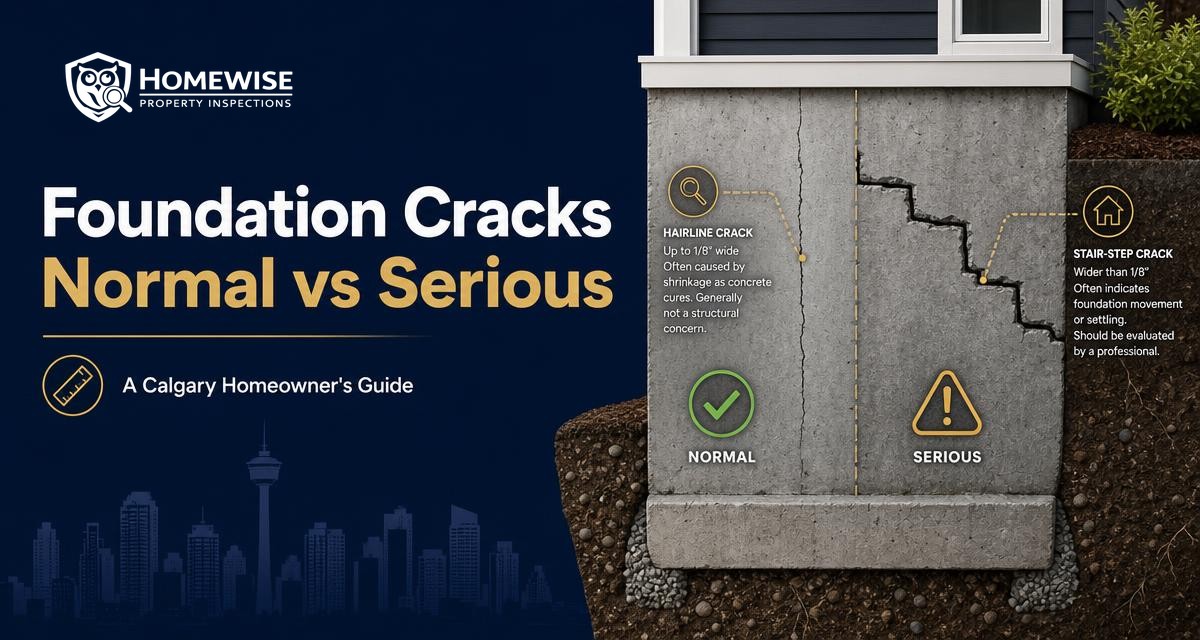
Almost every basement in Calgary has at least one crack. The question isn't whether you'll find one during inspection — it's whether the crack matters. Here's how to tell.
Why Calgary foundations crack
Calgary's clay-heavy soils swell when wet and shrink when dry, putting cyclical stress on concrete foundations. Add freeze-thaw cycles, occasional drought, and original construction shortcuts in some 1970s–80s homes, and cracks are essentially guaranteed.
Cracks that are usually cosmetic
- Hairline vertical cracks (under 3mm) from concrete shrinkage as it cured — typically appear within the first few years.
- Hairline diagonal cracks above windows or doors — common stress points, usually cosmetic.
- Map cracking on slab floors — surface-level shrinkage.
Cracks worth monitoring
- Cracks 3–6mm wide that haven't changed size in 12+ months.
- Diagonal cracks that don't show signs of horizontal displacement.
- Older cracks with no efflorescence (white mineral deposits) or moisture staining.
Cracks that need an engineer
- Horizontal cracks across foundation walls — often indicate soil pressure or wall failure.
- Step cracks in block foundations wider than 6mm.
- Cracks with active water staining or efflorescence — water is entering.
- Cracks that have widened since previous photos.
- Inward bowing or displacement of more than 6mm.
What HomeWise does during a Calgary inspection
We document every visible foundation crack with photos, measure widths with a crack gauge, check for moisture using a meter, and use thermal imaging to detect hidden water entry. If we see anything that warrants engineer review, we say so clearly in the report — and we don't try to play structural engineer ourselves.
Concerned about a foundation? Call (403) 710-7770 or book a Calgary home inspection.