

Condo Inspection in Calgary: Costs, Checklist & Buyer’s Guide
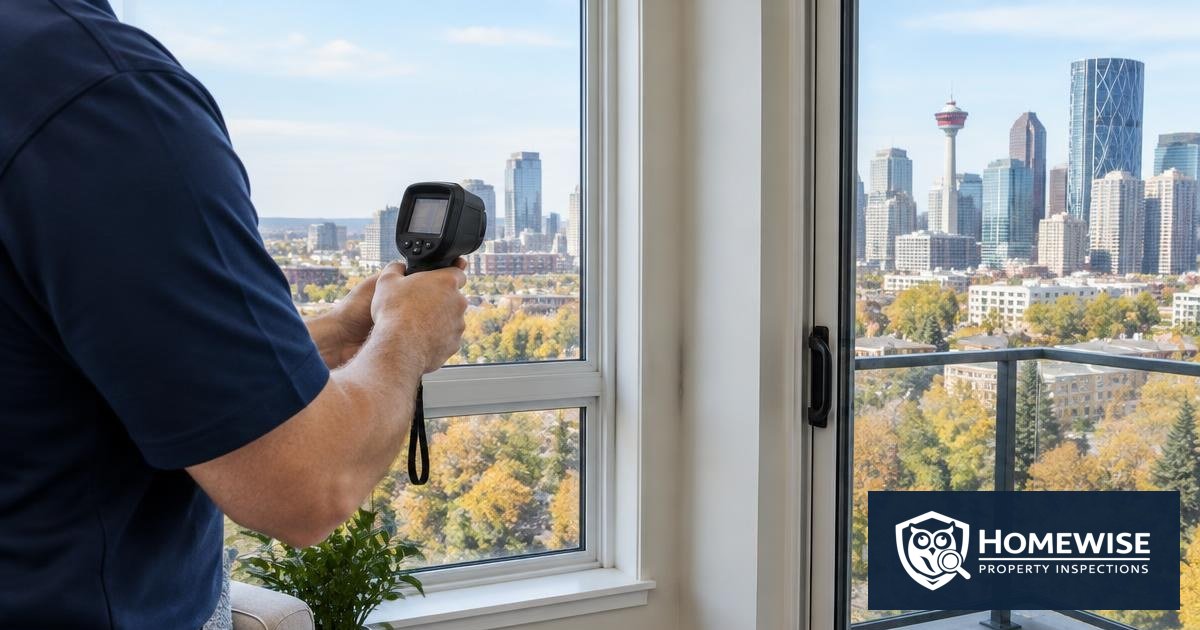
Illustrative image · Windows, balcony doors and moisture-prone areas are part of a condo unit inspection.
An apartment condo inspection in Calgary evaluates the accessible physical condition of the unit you are buying, plus visible common elements where access is permitted. HomeWise apartment condo inspections are a flat $375 + GST regardless of unit size or age, typically take 1.5–2.5 hours, and include thermal imaging, appliance functional testing and a same-day digital report. The total is $393.75 including 5% GST, with no size or age surcharge. Separately selected optional services are extra.
A clean lobby and freshly painted suite do not tell you whether a sink leaks, a fan coil needs attention, or a window has lost its seal. Equally, a unit inspection cannot tell you whether the condominium corporation has enough money for its next roof replacement. This guide explains what each part of your due diligence can — and cannot — answer.
By Colin Craig, Owner & Lead Inspector, HomeWise Property Inspections · Published October 9, 2026
Condo inspection at a glance
- Price
- Flat $375 + GST for apartment condos — $393.75 total, any size or age
- Typical time on site
- 1.5–2.5 hours, depending on size and access
- Report
- Same-day interactive digital report with photos
- Always included
- Thermal imaging and appliance functional testing
- Never added
- No size surcharge, no age surcharge, no new-build discount
- Separate
- Optional services, specialist investigations and document review
Review your condo documents with our free AI tool
A unit inspection tells you about the suite. It cannot tell you whether the reserve fund is healthy, whether special assessments are already approved, or who is responsible for your windows and balcony. If you have the condo document package, upload it to our free AI condo document review for a plain-language first pass and a list of questions worth asking.
- Reserve fund balance and study date
- Pending special assessments
- Condo fee trends
- Insurance deductible gaps
- Bylaw restrictions on pets, rentals and renos
- Maintenance patterns in the minutes
HomeWise does not obtain or professionally review condo documents for you. You upload your own package to the free tool. AI output can be incomplete or wrong and is not legal advice — verify important findings with your lawyer, the corporation or a qualified independent reviewer.
1. How much does a condo inspection cost in Calgary?
HomeWise’s apartment condo inspection price is a flat $375 before GST — $393.75 including GST, regardless of size or age. Size, layout and access may affect the time on site, but they do not increase the condo inspection fee. There is no new-build discount: a new condo still needs a thorough inspection.
- Typical on-site time: 1.5–2.5 hours for a condo unit, depending on size and access.
- Included: accessible in-suite systems, visible common-element observations, thermal imaging and appliance functional testing.
- Report: a same-day digital report with photographs and prioritized findings.
- Separate due diligence: legal advice, professional document review and specialist building investigations are not part of the physical unit inspection.
Use the instant MLS® inspection quote or booking page to check your property’s price. Our Calgary inspection cost guide compares other property types.
2. What does a Calgary condo inspection include?
The inspection is visual and non-invasive. We evaluate accessible components and operate equipment using normal controls where safe. Furniture, locked rooms, stored belongings, weather and corporation access restrictions may limit what can be inspected; those limits belong in the report.
Plumbing, bathrooms and moisture
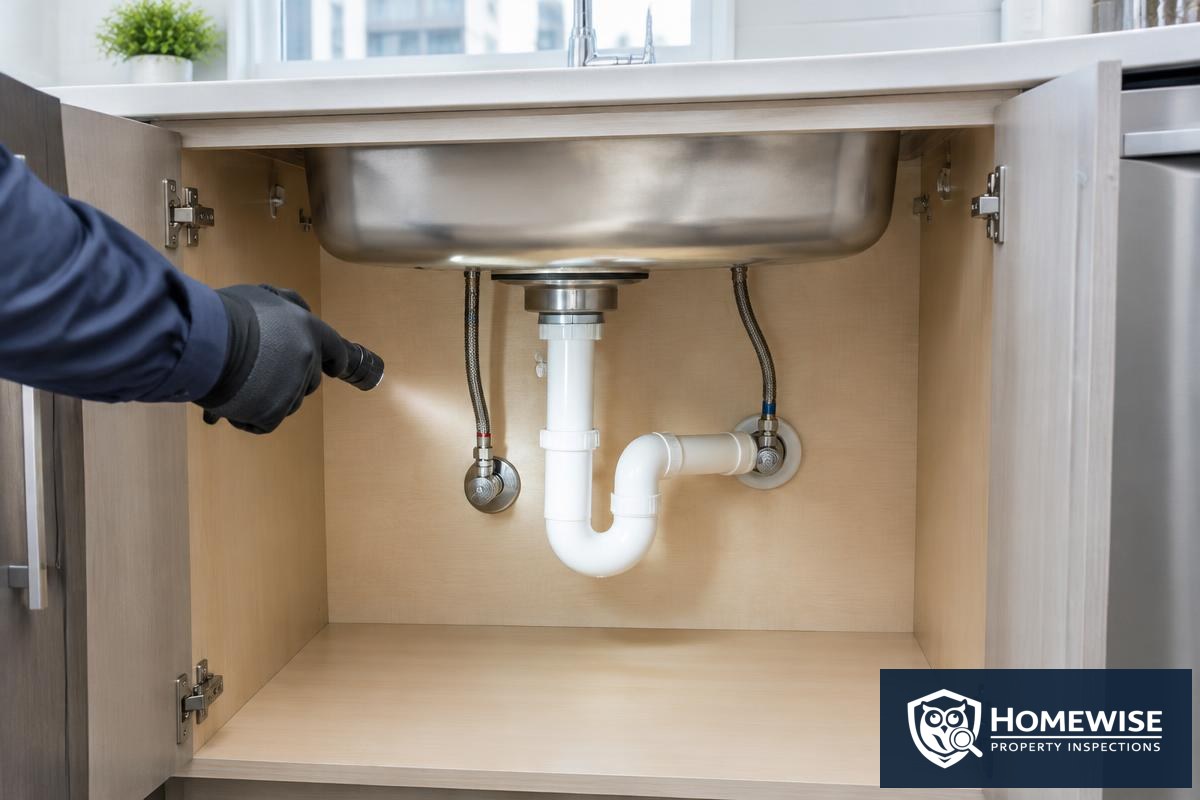
Accessible supply and drain piping, fixtures, under-sink connections, toilets and visible shutoffs are checked for leakage, deterioration and functional concerns. We look around tubs, showers, laundry areas and cabinets for staining or signs of past water damage. Concealed pipes and waterproofing behind tile cannot be fully verified without opening finishes.
Electrical panel, outlets and safety
We inspect the accessible in-suite panel and visible electrical components, and check accessible outlets and protective devices where safe. Damaged receptacles, questionable alterations and older wiring warrant attention. An inspection is not an electrical code certification; findings that need repair or further diagnosis should go to a qualified electrician.
Heating, cooling and ventilation
The unit may have a furnace, fan coil, electric heat or another system. We inspect accessible in-suite equipment, controls, filters and visible connections and test normal operation where conditions allow. Bathroom and kitchen ventilation matter too: ineffective exhaust can contribute to condensation and moisture damage. Shared boilers, chillers and central building systems are not comprehensively assessed during a unit inspection.
Windows, doors, finishes and appliances
We look for damaged seals, condensation patterns, sticking windows, door operation, visible finish deterioration and accessible balcony concerns. Appliance functional testing checks normal operation; it does not guarantee remaining life or test every program. Ask who is responsible for a window or balcony repair rather than assuming it is automatically the corporation.
Thermal imaging — useful, with limits
Thermal imaging shows surface temperature differences that can help identify areas needing closer investigation. It does not see through walls, prove the absence of leaks or diagnose mould. A cold patch may relate to air leakage, insulation, moisture or normal construction; observations need context and follow-up where appropriate.
3. What a condo inspection does not cover
Knowing the limits up front saves surprises later. A standard condo unit inspection does not include:
- Concealed conditions: pipes and wiring inside walls, waterproofing behind tile, or anything blocked by furniture, storage or finished surfaces.
- Building-wide systems: roofs, elevators, fire systems, central boilers, chillers and parkade structures are not comprehensively assessed.
- Code or safety certification: an inspection is not an electrical code certification, gas safety certificate or bylaw compliance report.
- Insurance, mould or air-quality testing: these need separate specialists where concerns are found.
- Corporation records: finances, reserve planning, bylaws and minutes are document due diligence, not a physical inspection.
Where something is out of scope but concerns us, the report says so and recommends who should look next.
4. High-rise vs low-rise apartment condos: what changes?
Condominium describes an ownership arrangement, not just a building shape. This guide covers apartment condos — homes reached by a shared hallway, whether in a tower, a mid-rise or a smaller walk-up building. The physical inspection scope follows the actual building and the components we can access; ownership and repair obligations must be confirmed separately.
High-rise apartments
Expect the focus to sit inside the suite: in-suite equipment, accessible plumbing and electrical components, finishes and appliances, with visible common elements noted where access is permitted. A brief observation of a hallway, balcony or parkade access is not a complete inspection of the building envelope, elevators, fire systems or parking structure. Restricted mechanical rooms and rooftops are not automatically included.
Low-rise and walk-up apartments
Smaller apartment buildings often put more equipment inside the unit itself — a furnace or fan coil, a water heater, and sometimes a private entry, patio or storage area. Those accessible extras are worth inspecting, and the condo plan still decides who maintains them.
Older apartment buildings
Age and construction matter more than the address. An older purpose-built apartment may still have original wiring, piping or heating equipment, and fresh paint or new flooring can sit over installations worth a closer look. Ask about permits, service history and any building-wide repairs already planned.
For the service scope, see HomeWise condo inspections and our Calgary condo inspection page.
5. Condo concerns worth checking in Calgary
Age, construction and maintenance history are more useful than a neighbourhood label. A Beltline high-rise, a Bridgeland walk-up and a newer apartment in Seton may have very different equipment and access limitations. These are concerns to investigate — not claims that every building in those communities has defects.
- Window condensation and cold corners: Calgary’s heating season makes ventilation, indoor humidity and window performance important. Staining deserves investigation, not an automatic diagnosis of a leak.
- Balcony and exterior water management: visible sealant deterioration, drainage concerns and staining can prompt questions about repair history and responsibility. Snow or inaccessible areas may prevent a meaningful observation.
- Aging heating equipment: find out what serves your suite, who maintains it and whether a contractor has recently serviced it.
- Older piping or wiring: visible Poly-B piping or aluminum branch wiring should lead to property-specific advice from qualified trades and your insurer, not assumptions based solely on build year.
- Renovations and hidden alterations: fresh finishes may conceal older installations. Ask about permits and relevant approvals for previous work.
- Building-wide repair plans: a parkade leak or exterior concern should lead to questions for the corporation and a review of relevant engineering reports, not a conclusion about future assessment costs from one visual visit.
6. Physical inspection vs condo document review
The physical inspection answers “What can we observe about this unit’s condition?” Document due diligence addresses the corporation’s finances, reserve planning, maintenance obligations, insurance and bylaws. Neither replaces the other. A good-looking suite can sit in a corporation facing costly repairs, and a well-funded corporation can contain a poorly maintained unit.
| Question about the condo | The inspection | The documents |
|---|---|---|
| Is there moisture staining above the vanity? | Looks for it | Silent |
| Is the fan coil heating and cooling properly? | Tests it | Silent |
| Will the reserve fund cover the next roof? | Cannot say | Shows the plan |
| Are special assessments already approved? | Cannot say | Shows the resolutions |
| Who pays for a failed window or balcony? | Can only ask | Sets the obligation |
| Does the corporation’s insurance cover your contents? | Cannot say | Shows the policy |
HomeWise does not obtain or professionally review condo documents for you. You obtain the package through your agent, lawyer or the condominium corporation. You can then upload it to our free AI condo document review tool for a plain-language first pass and questions to investigate.
AI output may be incomplete or wrong, especially if documents are missing, outdated or difficult to read. It is not legal advice, a professional document review or a guarantee against special assessments. Verify important findings with your lawyer, an independent qualified reviewer or the corporation before making a purchase decision.
Useful questions include: Is the reserve study current? Are major repairs planned? Are assessments already approved? Who maintains the windows and balcony? What does the insurance cover, and what coverage do you need? Our condo document guide explains the kinds of records buyers should ask about.
7. Before removing your condo purchase conditions
- Confirm your actual deadline. For a resale condo, inspection and document-review conditions depend on your purchase contract. Do not assume you automatically have ten days. Developer purchases have separate statutory rules; ask your lawyer which apply.
- Arrange access early. Tell the inspector whether the unit has its own mechanical equipment, basement, attic or garage. Ask the seller or property manager about access to relevant spaces.
- Obtain your documents separately. Coordinate with your agent or lawyer while the physical inspection is being scheduled, rather than waiting for one to finish before starting the other.
- Run the free AI document review. Upload the package you receive to the AI condo document tool to get plain-language notes and questions you can take to your lawyer.
- Discuss the findings. Distinguish safety issues and active leakage from routine maintenance and cosmetic wear. Ask what needs specialist follow-up and what could not be inspected.
- Confirm repair responsibility and next steps. Your agent and lawyer can help interpret contract options and ownership obligations. Allow time for a qualified trade or engineer if the report recommends one.
What you receive from HomeWise
Your same-day interactive report brings photographs, observations and recommended next steps together so you can discuss them with your realtor or a qualified contractor. It records what was accessible and what was not. Read about our HomeWise inspection reporting software.
Owner and lead inspector Colin Craig brings more than 20 years of residential building and renovation experience. HomeWise’s approach connects visible symptoms with practical construction knowledge, without pretending a non-invasive inspection can reveal every concealed issue. Learn more about why buyers choose HomeWise.
8. Common condo inspection questions
Do I need an inspection if the condo corporation handles maintenance?
A physical inspection is still useful. Accessible plumbing, electrical components, appliances and interior moisture issues can affect your unit. Corporation maintenance does not mean every component is covered or that every defect has been found.
Should I inspect a brand-new condo?
Yes. New units can have installation defects, incomplete work and equipment that does not operate correctly. An independent inspection helps document visible concerns for your builder; it does not replace municipal inspections or your warranty provider’s process.
Will the inspection predict special assessments?
No. A unit inspection cannot calculate the corporation’s funding needs or guarantee whether an assessment will occur. Relevant financial documents, reserve planning and specialist reports need separate consideration.
Do you inspect the whole roof, parkade and building systems?
Not as part of a standard unit inspection. We report visible common elements where access is permitted. A comprehensive building-wide assessment requires a separately agreed scope and appropriate specialists.
Can I attend, and when will I receive the report?
You are welcome to attend and discuss the findings. HomeWise delivers the digital report the same day. Confirm access arrangements and timing when you book.
9. Calgary condo inspection FAQ
Quick answers to the questions Calgary condo buyers ask us most.
How much is a condo inspection in Calgary?
HomeWise charges a flat $375 + GST ($393.75 total) for an apartment condo inspection anywhere in Calgary and the surrounding area, regardless of the unit's size or age. There is no size surcharge and no new-build discount.
Do you inspect condos in all Calgary quadrants and nearby towns?
Yes. We inspect apartment condos across every Calgary quadrant — NW, NE, SW and SE — from Beltline and Downtown towers to walk-ups in Bridgeland, Mission, Kensington and newer communities like Seton and Livingston. We also serve Airdrie, Cochrane, Okotoks, Chestermere and Canmore within our service area.
How fast can I get a condo inspection before my condition day?
We are open 7 a.m. to 9 p.m., seven days a week, and can usually fit a condo inspection in within a day or two. The interactive digital report is delivered the same day, so you have time to review it with your realtor before removing conditions.
Does a Calgary condo inspection include the parkade, roof or elevators?
No. A standard unit inspection covers the accessible interior of your suite plus visible common elements where access is permitted. Building-wide systems like roofs, parkades, elevators and central boilers require a separately scoped assessment with appropriate specialists.
What Calgary-specific issues do you look for in condos?
Calgary's long heating season makes window condensation, cold corners, ventilation and humidity control common concerns. We also watch for aging fan coils and furnaces, older piping such as Poly-B, aluminum branch wiring in 1960s–70s buildings, and balcony or exterior water-management concerns after freeze-thaw cycles.
Can you review my condo documents too?
HomeWise does not obtain or professionally review condo documents. You can upload your own document package to our free AI condo document review tool for a plain-language first pass, then verify important findings with your lawyer or a qualified independent reviewer.
Where we inspect condos
HomeWise is based in Calgary and inspects apartment condos across the city — every quadrant, from downtown towers to suburban walk-ups — plus Airdrie, Cochrane, Okotoks, Chestermere and Canmore. Not sure whether your building is in our service area? Call (403) 710-7770 and we will confirm.
Alberta resources for condo buyers
For ownership, insurance, reserve funds and developer-purchase rules, consult the Alberta government’s condominium information and its Purchasing a Condominium guide. Rules and agreements can change; your lawyer should advise on your specific transaction.
Book your Calgary condo inspection
Confirm the unit’s details, access and condition deadline, then book your physical inspection. For questions about scope, call (403) 710-7770.